INDUSTRY & RESEARCH
Non-contact 3D surface metrology

INTEGRATION
Integrable metrology solutions

NON-CONTACT 3D SURFACE METROLOGY
Experience true innovation
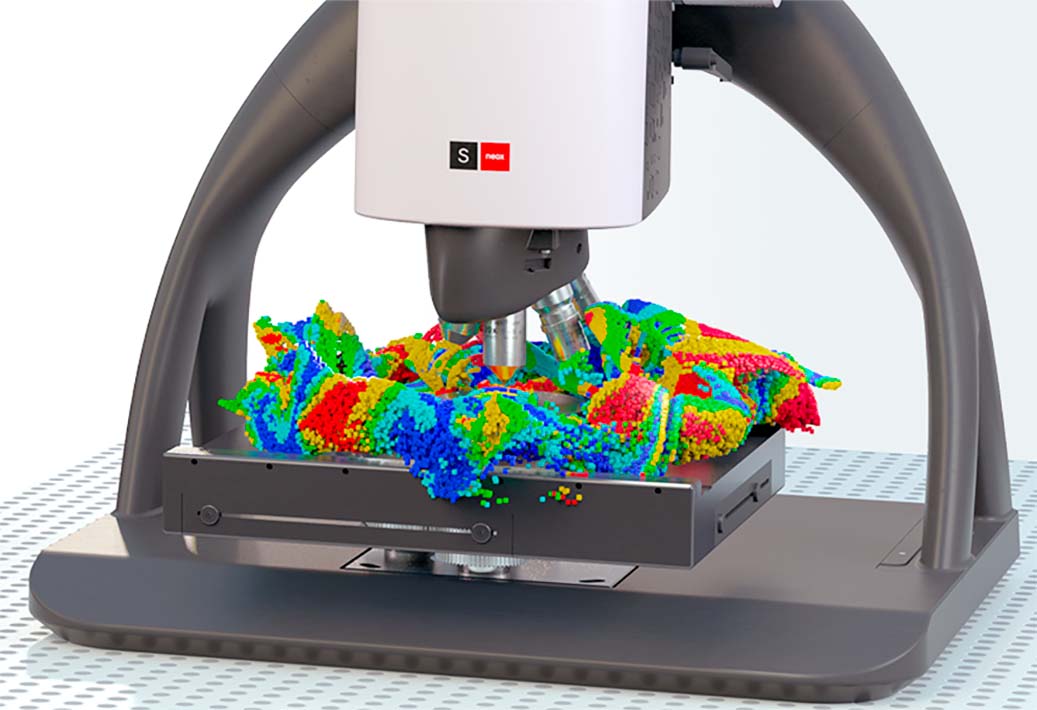
3D surface metrology is the measurement and characterization of micro- and nano-scale features on natural or manufactured surfaces.
This can be achieved very efficiently by capturing the 3D spatial coordinates of points on a surface using a non-destructive optical technique.
Sensofar Metrology designs and manufactures non-contact 3D surface profilers and integrable solutions to provide you with a tool that increases the quality of your products.
NON-CONTACT 3D SURFACE METROLOGY
Experience true innovation
3D surface metrology is the measurement and characterization of micro- and nano-scale features on natural or manufactured surfaces.
This can be achieved very efficiently by capturing the 3D spatial coordinates of points on a surface using a non-destructive optical technique.
We design and manufacture non-contact 3D surface profilers and integrable solutions to provide you with a tool that increases the quality of your products.
SURFACE TEXTURE
Leading with ISO 25178
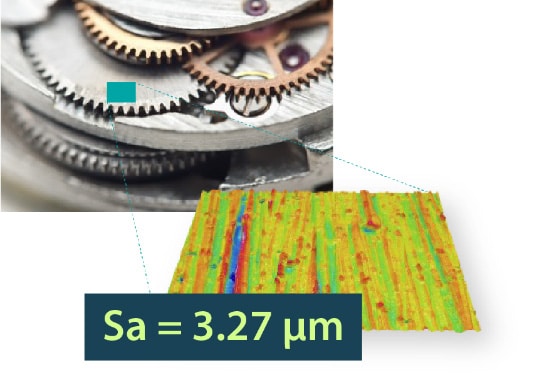
Sensofar brings leading expertise in surface texture measurement, designing precise, reliable tools that meet ISO 25178 standards. From research to manufacturing, our solutions ensure consistent, high-quality results in 3D surface characterization.
Sensofar brings leading expertise in surface texture measurement, designing precise, reliable tools that meet ISO 25178 standards. From research to manufacturing, our solutions ensure consistent, high-quality results in 3D surface characterization.
APPLICATIONS
Find your application
The experience gained by Sensofar in specific applications within the advanced manufacturing and consumer electronics markets has allowed us to detect specific needs and tailor individual solutions for each of them. Take a look through our solution pages and find yours!
APPLICATIONS
Find your application
The experience gained by Sensofar in specific applications within the advanced manufacturing and consumer electronics markets has allowed us to detect specific needs and tailor individual solutions for each of them. Take a look through our solution pages and find yours!

LEARN MORE WITH US
You can be an expert too!
At Sensofar we regularly host webinars and live events on various topics in the field of 3D optical metrology.
If you don’t have time to attend,
up to 10 recorded webinars are available whenever you want!

LEARN MORE WITH US
You can be an expert too!
At Sensofar we regularly host webinars and live events on various topics in the field of 3D optical metrology.
If you don’t have time to attend,
up to 10 recorded webinars are available whenever you want!
HOW IT WORKS
Enhanced 3D optical metrology techniques
Designed as high-performance optical profilers from the outset, some of our systems outperform all existing optical profilers, combining 3D optical metrology techniques all together.
The latest technology together with the most comprehensive software results in a high-level equipment of maximum competitiveness in the market.
Events

Testimonials
-
"The S neox has dramatically increased our throughput while giving our interdisciplinary lab the versatility we need."
Josh Siegel, PhD Candidate and Lab Manager - Ozdoganlar Laboratory
-
"The team at Sensofar has been instrumental in helping us unlock advanced surface roughness measurement capabilities. Before acquiring the S wide and S neox, our organization did not have a reliable way to validate mold surface finishes. With Sensofar’s equipment, we can now directly quantify surface roughness on both tools and finished plastic components, as well as track tool wear over time. Their support team is exceptional and consistently delivers knowledgeable, timely application support within 24 hours."
Jasmine Zappala, Quality Engineering Manager
-
"S neox has been a core tool throughout my PhD and postdoctoral research. Its ability to deliver high-resolution, quantitative surface data and to integrate seamlessly with numerical and FEA simulations enabled realistic visualization and direct validation of erosion and material removal models. The system’s flexibility and reliability made it indispensable for bridging experimental measurements with advanced computational analysis."
Mahdi Nekahi, PhD Postdoctoral Fellow
-
"The S neox optical profiler has been essential to understanding how laser texturing enhances the functional performance of cylinder liner segments."
Niall Burtt, Paul Butler-Smith, Tian Long See
-
"With the S mart 3D profilometer, it is possible to more precisely measure the volume loss of the wear tracks after the friction and wear tests, since it measures the real shape of the wear track."
Adrián Claver and José Antonio García Lorente
-
"Sensofar worked closely with us to choose the specific profilometer and add-on options that worked best for specific samples and imaging needs"
Lauren Zarzar, Nate Sturniolo, Caleb Meredith, and Amy Goodling
-
"At GPAINNOVA, the S neox Five Axis is specially used to quantify the polishing process quality and to report the roughness reduction in the samples after polishing with DLyte"
Yaiza Gomez, David Gutierrez, Laura Abellan and Paul Berenguer
-
"Everything is possible with the S neox Five Axis. Steep angles and very small cutting-edge measurements of a few micrometers are no longer a problem for 3D optical profiling"
Thomas Forrer & Paco Neuhaus
-
"The 3D optical profilometer S neox allowed machining specialists to identify the tool responsible for the defect and to follow its wear during serial production, thus controlling the manufacturing process and improving its outcome"
Karine de Freitas
-
"Thanks to the S neox, 3D optical profilometer from Sensofar, it was possible to easily characterise the topography of the microchannels fabricated with laser technologies"
Research Group
-
"Transparent materials such as glass or PMMA were imaged thanks to Sensofar’s unique capability to combine Confocal and Focus Variation techniques; Confocal Fusion"
Raul Garcia



-
"The S neox has dramatically increased our throughput while giving our interdisciplinary lab the versatility we need."
Josh Siegel, PhD Candidate and Lab Manager - Ozdoganlar Laboratory
-
"The team at Sensofar has been instrumental in helping us unlock advanced surface roughness measurement capabilities. Before acquiring the S wide and S neox, our organization did not have a reliable way to validate mold surface finishes. With Sensofar’s equipment, we can now directly quantify surface roughness on both tools and finished plastic components, as well as track tool wear over time. Their support team is exceptional and consistently delivers knowledgeable, timely application support within 24 hours."
Jasmine Zappala, Quality Engineering Manager
-
"S neox has been a core tool throughout my PhD and postdoctoral research. Its ability to deliver high-resolution, quantitative surface data and to integrate seamlessly with numerical and FEA simulations enabled realistic visualization and direct validation of erosion and material removal models. The system’s flexibility and reliability made it indispensable for bridging experimental measurements with advanced computational analysis."
Mahdi Nekahi, PhD Postdoctoral Fellow
-
"The S neox optical profiler has been essential to understanding how laser texturing enhances the functional performance of cylinder liner segments."
Niall Burtt, Paul Butler-Smith, Tian Long See
-
"With the S mart 3D profilometer, it is possible to more precisely measure the volume loss of the wear tracks after the friction and wear tests, since it measures the real shape of the wear track."
Adrián Claver and José Antonio García Lorente
-
"Sensofar worked closely with us to choose the specific profilometer and add-on options that worked best for specific samples and imaging needs"
Lauren Zarzar, Nate Sturniolo, Caleb Meredith, and Amy Goodling
-
"At GPAINNOVA, the S neox Five Axis is specially used to quantify the polishing process quality and to report the roughness reduction in the samples after polishing with DLyte"
Yaiza Gomez, David Gutierrez, Laura Abellan and Paul Berenguer
-
"Everything is possible with the S neox Five Axis. Steep angles and very small cutting-edge measurements of a few micrometers are no longer a problem for 3D optical profiling"
Thomas Forrer & Paco Neuhaus
-
"The 3D optical profilometer S neox allowed machining specialists to identify the tool responsible for the defect and to follow its wear during serial production, thus controlling the manufacturing process and improving its outcome"
Karine de Freitas
-
"Thanks to the S neox, 3D optical profilometer from Sensofar, it was possible to easily characterise the topography of the microchannels fabricated with laser technologies"
Research Group
-
"Transparent materials such as glass or PMMA were imaged thanks to Sensofar’s unique capability to combine Confocal and Focus Variation techniques; Confocal Fusion"
Raul Garcia